AI search is evolving. The three-word keyword era is shifting, and fan-out queries are changing how content gets discovered online.
Think of traditional SEO as a highway billboard. You want to be big, bright, and positioned exactly where drivers are looking so they head to your store at the right exit.
The emerging AI search landscape works differently. It’s more like briefing a local tour guide. When a tourist asks, “Where can I find a quiet place to eat with great views but not too expensive?” the guide doesn’t consult one directory. They draw on their knowledge: recent reviews, local menus, current conditions. They search across multiple sources of information. To earn that recommendation, you don’t need the biggest billboard. You need the guide to know and trust your specific expertise for that exact combination of needs.
This shift from generic billboards to personal tour guide captures what’s happening in search today.
For years, we’ve optimized for three-word phrases, obsessing over rankings, and mimicking top results. Meanwhile, search itself has undergone a quiet revolution. AI assistants like ChatGPT, Gemini, and Perplexity have become the new gatekeepers of information discovery.
The rules have changed.
Fan-Out Queries: Understanding the New Search Landscape
The Evolution of Search Queries
Remember when we trained users to be brief? “Best laptop 2025.” “Pizza near me.” Soon enough you’ll notice those days are fading fast.
Today’s users treat AI search bars like consultants. They ask complex, nuanced questions. A recent study conducted by SEO Consultant Metehan Yeşilyurt shows the average ChatGPT prompt now runs about 42 words long. These aren’t keywords anymore – they’re conversations.
Users specify constraints, explain context, and outline trade-offs. And here’s the kicker: AI models actually understand this complexity. They don’t just match words. They process intent.
What Happens Behind the Curtain: Fan-Out Queries Explained
Here’s an interesting development. When someone asks an AI assistant a complex question – say, “recommend a laptop under $1000 for video editing that’s portable and quiet” – the model typically doesn’t search for that exact phrase.
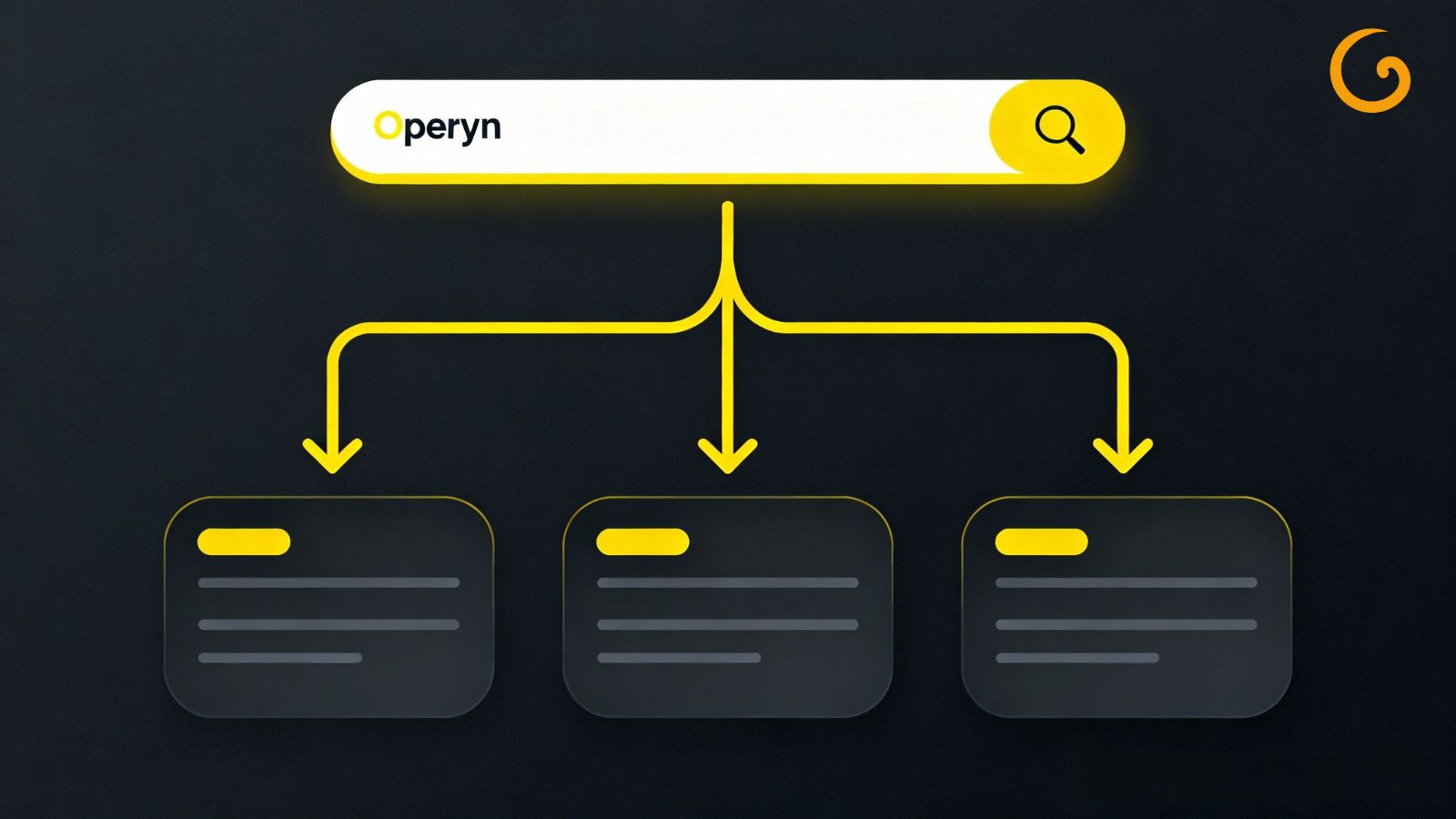
Instead, it performs what we call fan-out queries.
The AI breaks that single prompt into multiple simpler searches. For that laptop question, it might silently run 10 to 25 different queries:
- “Best laptops for video editing under $1000”
- “Lightweight laptops for creative work”
- “Quiet laptops with good cooling systems”
Behind the scenes, AI has searched across multiple variations then synthesizes everything into one coherent answer.
The 12% Intersection: A New Opportunity for Visibility
Now for the piece of data that should make every SEO specialist rethink their strategy. An Ahrefs research shows that only 12% of links cited by AI assistants appear in Google’s top 10 organic results for the same user prompt.
Read that again. This means 88% of cited content comes from somewhere else entirely. The AI assistant finds these sources through its fan-out process, pulling from pages that rank for related variations and sub-queries. Suddenly, you don’t need to rank first for just the main keyword. You need to be the best answer for at least one of the many fan-out variations.
This creates real opportunity. Niche expertise matters again. Unique perspectives get rewarded. You no longer have to clone the top-ranking page to get visibility.
How to Actually Optimize for Fan-Out Reality
So how do we adapt? To remain visible in this new landscape, your strategy must move beyond the traditional obsession with high-volume keywords into the new realm of audience intent mapping.
- Target questions, not just keywords. Use research tools to find the actual long-tail questions your audience asks AI assistants. These are your fan-out opportunities.
- Build content clusters. Instead of targeting single queries, create clusters that cover every angle of a topic. This satisfies various fan-out permutations.
- Structure with BLUF (Bottom Line Up Front). Make each section a self-contained unit of knowledge. AI models can easily extract and retrieve these chunks for sub-queries.
- Map to actions. Here’s a compelling stat: A data set from 1800+ real ChatGPT user prompts show that 75% of AI prompts are commands, not questions. Ensure your content supports jobs-to-be-done like “how to create,” “track,” or “generate.”
Fan-out queries fragment visibility across dozens of related searches, making decades-old rank-based metrics insufficient for understanding true discoverability. Measuring success now requires tracking where and how often a brand surfaces across these distributed sub-queries, not just whether it ranks for a single primary keyword.
The Fundamental Shift
At Operyn, we believe there’s already a fundamental shift from keyword optimization to intent mapping. From ranking for one phrase to being discoverable across dozens of related searches.
The fan-out reality rewards depth over breadth. Expertise over generic coverage. Your content doesn’t need to resemble top-ranking pages to surface within fan-out search paths. In fact, being different makes you more likely to get picked up during the fan-out process.
The billboard era taught us to be louder. The tour guide era requires us to be more knowledgeable, more specific, and more genuinely helpful.
That’s a shift we can’t fall behind.
In the next article, we examine what most strongly determines whether a brand is surfaced across these fan-out paths – specifically, why branded web mentions correlate more closely with AI visibility than traditional link-based signals.