AI Search: What It Is, How It Works, and How It’s Changing SEO
AI Search is shifting discovery from keyword-based link browsing to conversational, AI-generated answers, making brand trust, citations, and authority signals increasingly important for visibility.

Mina
AEO enthusiast
Update on
AEO Principles

AI Search is reshaping how people discover information online. Instead of typing short keywords and scrolling through links, users now ask full questions and receive direct, AI-generated answers from tools like ChatGPT, Perplexity, and Google AI Overviews. This shift changes not only search behavior, but also how brands gain visibility, trust, and traffic in 2026 and beyond.
What Is AI Search?
AI Search refers to search experiences powered by large language models (LLMs) that generate answers rather than returning a traditional list of web pages. These systems understand user intent, combine information from multiple sources, and present it in a conversational format. As a result, users no longer “search and click.” They ask, refine, and continue the conversation until they reach a usable answer.
How Google AI Overviews and AI Mode Change Search
Google has integrated generative AI directly into Search through AI Overviews and AI Mode. AI Overviews appear at the top of search results as summarized answers, allowing users to get key information without clicking through to websites. AI Mode extends this experience by introducing a conversational interface inside Google Search, where users can ask follow-up questions without starting a new query. Together, these features make search faster, more contextual, and increasingly zero-click.
How Fast Is AI Search Adoption Growing?
The adoption of AI Search is happening at unprecedented speed. ChatGPT reached 100 million users in just two months, making it the fastest-growing consumer app in history. By comparison, Instagram took more than two years to reach the same milestone, while TikTok took around nine months. This rapid adoption indicates a fundamental change in how people prefer to access information, not just a temporary trend.
Why Is AI Search Taking Off Now?
AI Search is growing because it aligns perfectly with modern user expectations. People want instant answers, not long lists of links. They want interactive exchanges where they can add context, ask follow-up questions, and receive explanations tailored to their specific situation. Most importantly, users want actionable information. AI Search helps them write content, make decisions, analyze scenarios, and apply insights immediately, rather than just consuming information passively.
Is Traditional Search Losing Its Role?
Traditional search is not losing relevance. In fact, average Google Search usage has slightly increased since the rise of ChatGPT. AI tools often introduce users to new concepts, tools, or terminology they were not previously aware of, which then leads them to Google to explore further. For high-risk or high-importance topics such as financial information, technical guides, or data analysis, users still rely on traditional search to verify and cross-check answers. AI Search and traditional search now complement each other rather than compete directly.
How Are Consumers and Organizations Using AI Search?
Both consumers and organizations use AI Search in three main ways. First, they ask questions to seek advice, explanations, or guidance. Second, they use AI to complete tasks such as writing, planning, analyzing, or coding, often in a professional context. Third, they use AI for expression, including brainstorming ideas, reflecting on problems, or exploring new perspectives. Search has evolved from a discovery tool into an execution and decision-support system.
How Is Search Behavior Changing in the AI Era?
Search behavior is shifting from keyword-based queries to full conversations. Instead of typing short phrases, users now write longer prompts, provide more context, and engage in multiple follow-up questions. Search is no longer a one-time action; it is an iterative process that evolves as the user’s understanding deepens.
Are Prompts Becoming More Conversational?
Yes, and the data reflects this shift clearly. The average prompt on ChatGPT is around 23 words, while the average Google search query contains only about 3.4 words. Longer prompts indicate clearer intent, more complex needs, and a desire for nuanced, tailored responses rather than generic results.
Which Queries Trigger AI Answers Most Often?
AI-generated answers appear most frequently for long, specific, and low-competition queries, particularly those that involve explanations, definitions, or step-by-step guidance. These types of queries require synthesis and clarity, which is where AI Search performs best. They are also the moments when trust and authority have the greatest influence on which sources are referenced.
Can AI Search Results Be Trusted?
AI Search engines are actively improving the reliability of their answers. Many now provide clear citations and linked sources so users can trace information back to its origin. Models are continuously updated, and user feedback plays an important role in correcting errors. Ultimately, trust in AI Search depends less on rankings and more on the credibility and consistency of the sources being cited.
What Is Generative Engine Optimization (GEO)?
Generative Engine Optimization, or GEO, is the practice of optimizing your brand and content to appear in AI-generated answers rather than traditional search rankings. While SEO focuses on keywords, positions, and clicks, GEO focuses on brand mentions, citations, and authority signals within generative AI systems. AI engines do not rank pages in the traditional sense; they recommend brands they consider trustworthy.
How AI Search Affects SEO and Web Traffic
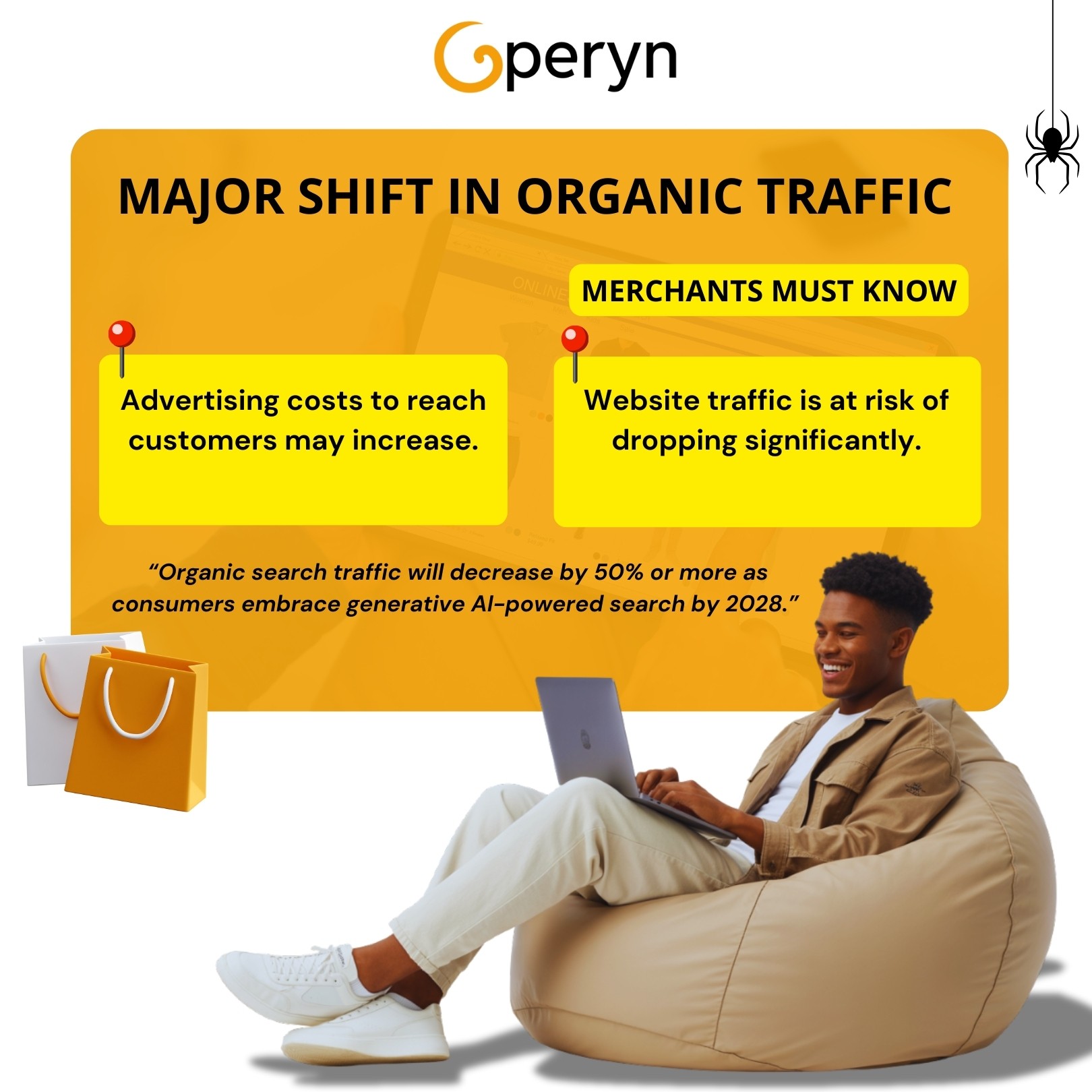
AI Search is already reducing click-through rates by answering questions directly within the interface. Looking ahead, industry forecasts suggest that traffic from large language models could surpass traditional organic search traffic by 2029. This means that future SEO success will depend increasingly on whether a brand is referenced and trusted by AI, not just whether its website is visited.
How Brands Can Appear in AI Search Results
To increase visibility in AI Search, brands need to focus on credibility and presence across trusted sources. This includes earning mentions in media, professional platforms like LinkedIn, and authoritative publications. Publishing genuine expertise through case studies, original research, and first-hand insights is critical. Brands must also clearly communicate what makes them unique, whether that is speed, exclusivity, or market leadership. AI systems favor clarity, consistency, and real-world validation.
Conclusion
Search is no longer just about being visible; it is about being trusted. AI Search is conversational, generative, and driven by authority rather than rankings. Brands that understand how AI decides which names to mention will define discoverability in the years ahead. This is the future of search optimization, and it is the problem Operyn is built to solve.
Share on social media