The Conversion Paradox: High Quality, Low Volume Traffic from AI Search
AI-referred traffic creates a conversion paradox where fewer clicks can produce greater business value because AI systems pre-qualify users through synthesized recommendations, making citations, mentions, authority, and revenue-focused measurement more important than raw traffic volume.

Leela Adwani
AI Visibility Researcher and Editor
Update on
Visibility Research

The digital search landscape is undergoing a structural shift defined by what industry analysts call “The Great Decoupling,” a phenomenon where total search volume continues to grow while clicks to external websites decline dramatically. A comprehensive analysis by Bloom reveals that while Google processes nearly 13.6 billion searches daily, approximately 60% of those searches now end without a click. This traffic erosion is primarily driven by AI search features like Google’s AI Overviews, which have caused click-through rates (CTR) to plummet for informational queries.
However, this "traffic apocalypse" has revealed a startling pattern: while traffic from AI platforms represents fewer visitors to websites, those visits carry materially higher intent and conversion potential than those arriving through traditional organic search. This creates a conversion paradox: lower traffic volumes paired with disproportionately higher business value.

Traffic From AI and the Conversion Paradox of Modern Search
Fewer Clicks, Different Intent
AI-assisted search changes how users move through the discovery process. Instead of scanning lists of links, users increasingly receive synthesized answers that compress research, comparison, and evaluation into a single interface. By the time a citation or link is presented, much of the decision-making work has already occurred upstream.
As a result, AI-referred visits are not exploratory in the same way as traditional organic traffic. They are often the outcome of a narrowed set of recommendations surfaced by the model, reflecting a higher degree of intent alignment between the user’s need and the cited source.
Across multiple industry analyses, AI-referred sessions consistently show higher engagement and conversion tendencies than standard search traffic. This research aggregating over 12 million website visits across multiple datasets, reports that AI-referred traffic converts at a rate of 14.2%, compared to just 2.8% for traditional Google organic traffic. This represents a 5.1x advantage in conversion effectiveness for visitors referred by tools like ChatGPT, Gemini, Claude, and Perplexity. Extending beyond simple conversion rates, across analyzed datasets, AI-referred sessions generated an average revenue per visit of approximately $47, compared to roughly $9 for traditional search.
Furthermore, AI-referred visitors demonstrate significantly higher engagement metrics, staying on sites 4.1x longer and viewing 3.2x more pages than their search-engine counterparts. These customers also possess a 67% higher lifetime value (LTV) and generate 158% more referrals, suggesting that AI platforms effectively match users with the solutions that best fit their specific needs.
Many of the performance differentials cited above should be interpreted as directional signals rather than precise benchmarks due to referrer loss, attribution gaps, and blended AI traffic sources. While exact conversion multiples vary by dataset and sector, the directional signal is consistent: AI traffic converts at materially higher rates despite representing a smaller share of overall visits.
Why AI-Referred Visitors Behave Differently
This performance gap is best explained by changes in search psychology rather than ranking mechanics alone. AI-mediated queries tend to be longer, more contextual, and more constrained than traditional keyword searches. Users describe problems, preferences, and trade-offs explicitly, allowing the model to filter options before any click occurs.
When an AI system presents a short list of solutions or names a brand directly, it transfers a degree of trust to the cited source. The user is no longer choosing from ten blue links; they are validating or acting on a recommendation that has already been contextualized. This shifts the click from the start of the funnel to much closer to the point of decision.
In practical terms, the website visit becomes a confirmation step rather than a discovery step.
Industry-Specific Performance Gains
The conversion advantage of AI-referred traffic appears most pronounced in sectors that require high-involvement research or complex decision-making. Based on our observations, software, professional services, and financial products consistently show stronger downstream performance when traffic originates from AI systems.
• SaaS and Technology: In observed datasets, some SaaS and technology businesses exhibit conversion multiples exceeding 8x relative to traditional search, though results vary widely by brand and category.
• Professional Services: This vertical sees the highest overall conversion rates from AI at 21.3%, as the technology helps users articulate specific problems to find relevant expertise.
• Travel and Banking: AI-driven traffic to travel sites has surged 17-fold, with visitors generating 80% more revenue per visit than non-AI referral. In banking, AI-referred users are 23% more likely to initiate a loan or credit application.
That said, the magnitude of this AI-referral advantage varies widely by industry, brand maturity, and measurement approach. These patterns should be interpreted directionally rather than as fixed benchmarks.
The Measurement Challenge of Traffic from AI
Despite its value, AI-referred traffic is often difficult to measure accurately. Many AI assistants and browsers operate in environments that obscure or remove traditional referrer data. As a result, high-intent visits may be misclassified as direct or unassigned traffic in analytics platforms.
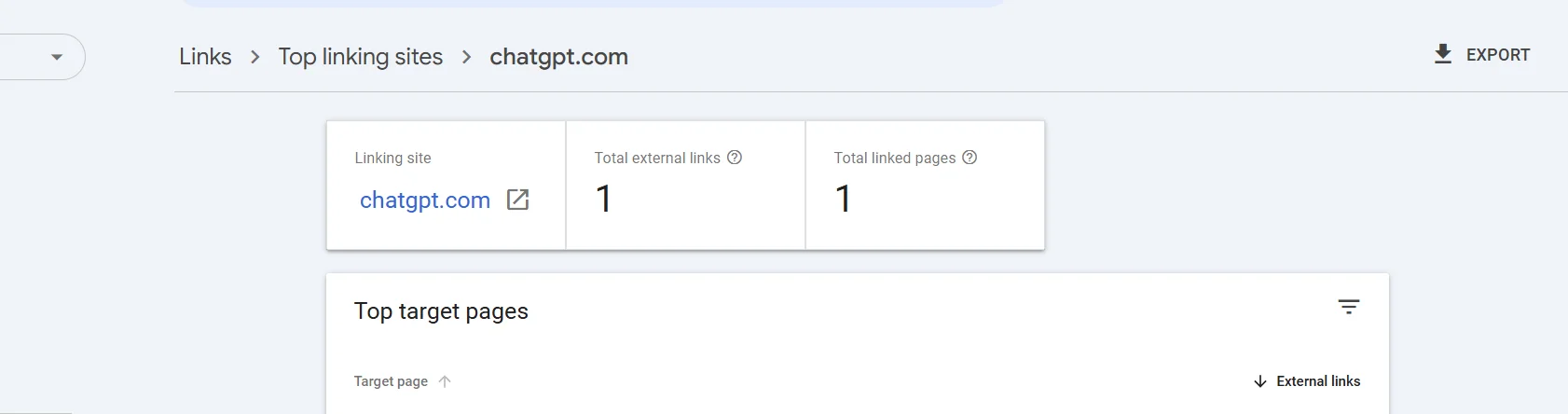
Traffic from ChatGPT
At the same time, a growing share of AI interactions result in zero clicks at all. Visibility increasingly occurs at the citation and mention layer rather than through visits to owned properties. This shifts the emphasis from traffic volume as a primary KPI toward presence, positioning, and attribution within AI-generated answers.
In this context, Answer Engine Optimization (AEO) emerges not as a replacement for SEO, but as a complementary discipline focused on ensuring brands are eligible to be cited, referenced, and trusted by AI systems.
From Traffic Arbitrage to Authority
Research firm Gartner predicts that by late 2026, traditional search volume will decline by 25% as users migrate to "substitute answer engines." However, the economic impact may be mitigated by the superior quality of the remaining traffic; financial modeling suggests AI channels will drive economic value comparable to traditional search by late 2027 due to these higher conversion rates.
The transition to a neural discovery paradigm represents the end of the traffic-arbitrage era and the beginning of the authority-based web. Brands that successfully adapt to this new reality will focus on revenue-over-traffic metrics, building expertise and technical structures that make their content "selectable" for AI agents.
Because much of AI visibility occurs without a click, organizations require instrumentation beyond traditional analytics. This is the operational gap AEO platforms aim to address: tracking citations, brand mentions, and eligibility signals that determine whether a source is selected at all. Operyn's AEO Technical Checklist outlines the technical structures that consistently appear in AI-selected sources, including structured attribution, extractable formats, and crawler-accessible architectures.
Share on social media