The Gemini Search Topology: Navigating Gemini, AI Overviews, and AI Mode
The Gemini Search ecosystem splits AI visibility across architecture, summaries, and conversational exploration, requiring brands to measure not just whether they are cited, but where, how prominently, and how early they appear across AI Overviews and AI Mode.

KumarM
Writer - Researcher
Update on
AEO Principles

For brands monitoring their digital footprint in 2026, the black box of AI search has fractured. Google’s integration of Generative AI is no longer a monolithic update; it has branched into a specific topology consisting of Gemini Search, AI Overviews, and AI Mode.
The Gemini Search Topology: Distinguishing AIO from AI Mode
Traditional SEO metrics fail to capture the attribution leak occurring as users shift from static summaries to conversational research. As an analytical SEO or CMO, understanding the mechanical differences between these layers is not just a technical exercise but a survival requirement.
The Three Layers of the Gemini Search Ecosystem
Google’s AI implementation serves three distinct functions, each represents a different diagnostic challenge:
Gemini - The Underlying Architecture: Gemini (now at version 3.1) is the multimodal 'brain' or engine. It is the platform-level model that processes text, code, and images. While developers access it via API, searchers experience it as the logic-gate that decides which brands are relevant enough to be considered for synthesis.
AI Overviews (AIO) - The Summary Layer: Built for Fact-Finding, AI Overviews are the concise summaries at the top of standard SERPs. Data from early 2026 suggests AIOs appear in nearly 45% of informational searches. For a brand, being cited here provides awareness but risks Zero-Click stagnation, as the user’s intent is often satisfied without a visit.
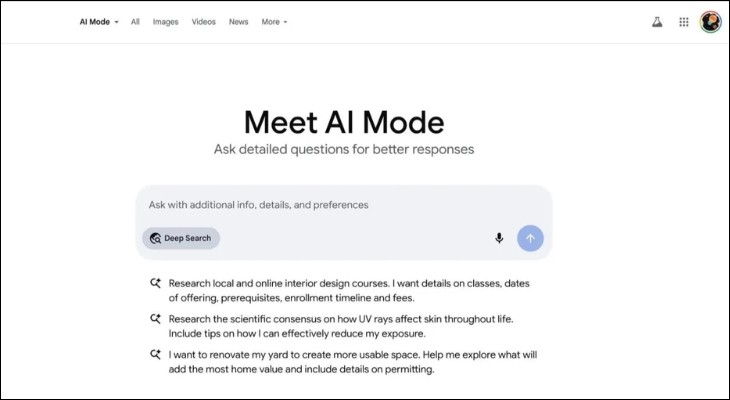
AI Mode - The Conversational Deep-Dive: This is the newest and most disruptive layer. AI Mode is a dedicated, separate search tab built for nuanced, multi-step exploration. It uses a "query fan-out" technique, which entails running multiple background searches simultaneously to answer complex "what-if" scenarios.
The Diagnostic Gap: Why Ranking is Now Insufficient
The fragmentation of search creates a new measurement problem. There are three specific areas where traditional visibility is leaking:
1. The Attribution Leak: Being the Answer vs. Being the Source
In AI Overviews, Google often aggregates data into a single paragraph. This leads to attribution dilution, where your data is used to satisfy the query, but your brand name is buried in a small citation chip. In AI Mode, the risk is even higher: as a conversation progresses through 4 or 5 turns, the AI may retain your information but lose the link to your site, effectively laundering your expertise into a generic AI answer.
2. The Structured vs. Narrative Trade-off
There is a mechanical tension in how you must optimize for these two modes:
For AIO (The Hook): Content must be high-schema and bulleted. The goal is to provide snackable facts that the Gemini engine can easily extract as a direct answer.
For AI Mode (The Logic): Content requires narrative depth and reasoning chains. Because AI Mode breaks complex questions into subtopics, your content must serve as an information hub that can answer follow-up questions about pricing, timelines, and pitfalls.
3. Interaction Cost: The New Visibility Metric
In traditional SEO, we measure positions. In 2026, we must measure the "Path to Citation." If a user is researching a vendor in AI Mode, how many conversation turns does it take for your brand to be recommended? If a competitor is mentioned in the first response, but you only appear after the user asks for more options, your Visibility Health is critically lower, regardless of your standard search ranking.
Strategic Framework: Mapping Intent to Mode
To defend your market share, your content strategy must align with the specific constraints of the search topology:
The End of "Lazy" SEO
The emergence of AI Mode represents the maturation of the search experience. It rewards content that contributes to a multi-dimensional conversation rather than just providing a simple answer.
The diagnostic challenge for 2026 is clear: You must know where you are being cited, how often you are being omitted, and at what stage of the conversation you disappear. The brands that win will be those that treat AI visibility as a core security and marketing metric. For teams looking to operationalize this approach, the Operyn Insider Program provides a structured pathway to measure and improve AI visibility across systems.
Share on social media