Allocating Content Resources Using the Topic Battlegrounds Matrix
The Topic Battlegrounds Matrix helps prioritize content investment by identifying where a brand should defend contested topic leads, maintain uncontested strengths, or move quickly into low-competition gaps where AI models have not yet formed strong brand associations.

Ly Phan
AI Visibility Researcher and Editor
Update on
Product Mechanics

Welcome to Part 8 of the Operyn Product Guide Series. (If you are just joining us, start with Part 1: Calibrating Your AI Tracking Environment.)
In Part 5, we used the Topic Battlegrounds heatmap to map competitive activity by topic. Part 8 builds on that, using the same matrix as a framework for deciding where to invest your content resources next.
Open the Competition module and scroll to Topic Battlegrounds.
What the Matrix Shows
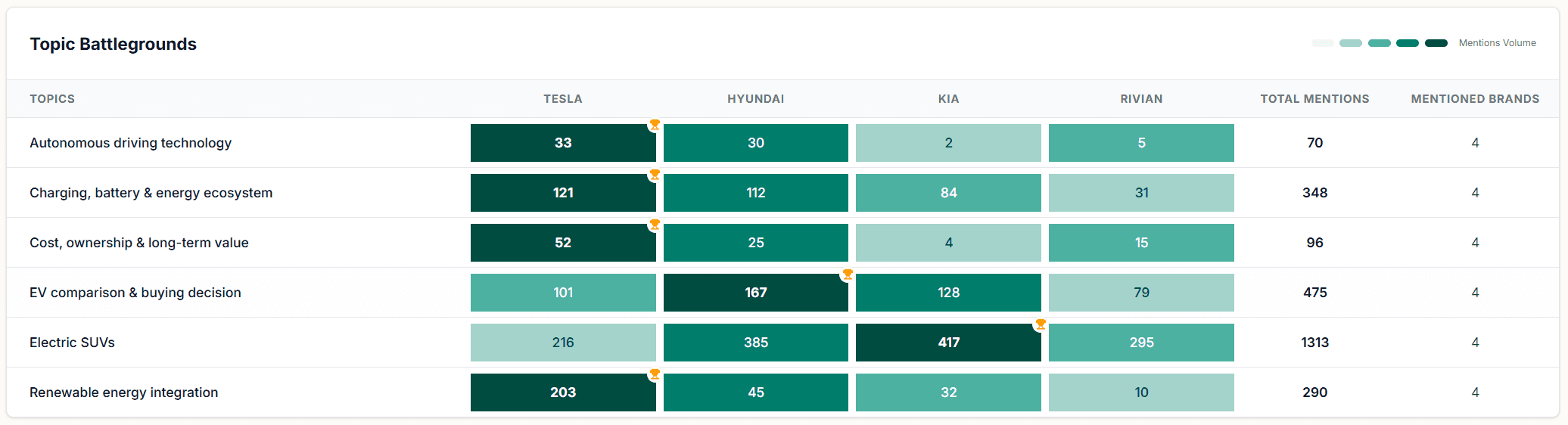
Each row is a topic. Each column is a tracked brand. Each cell shows that brand's mention count in that topic over your selected time window. The Total Mentions column shows aggregate competitive activity per topic. The Mentioned Brands column shows how many distinct brands appear in AI responses for each topic.
You already know how to read individual cells. The content allocation question requires reading the matrix as a whole: which topics are worth investing in, and which are not?
Four Allocation Patterns
Pattern 1: You lead, competition is thin. Your mention count is the highest in the row and the Total Mentions figure is low. AI models associate your brand with this topic and few competitors are contesting it. This topic doesn't need new content investment to defend. It just needs maintenance. Publishing updates here protects the position without requiring you to outpace a field of competitors.
Pattern 2: You lead, competition is heavy. Your mention count is the highest but Total Mentions is high and a competitor is close behind. This is a contested topic where your lead is real but not safe. Content investment here is defensive. The goal is to extend the gap before a competitor closes it.
Pattern 3: You trail, competition is heavy. A competitor leads and Total Mentions is high. This topic has strong AI model associations with another brand. Displacing an established citation source in a crowded topic takes sustained effort. Unless this topic is critical to your pipeline, it is a lower return on investment than Pattern 4.
Pattern 4: You trail, competition is thin. Your mention count is low but so is Total Mentions. AI models have weak associations across the board for this topic. That is an opening. A focused content push here can establish your brand as the primary citation source before competitors move in.
Pattern 4 topics are where content investment has the highest expected return. Pattern 2 topics are where neglect is most costly.
Cross-referencing with Citation Data
Mention counts in the heatmap don't distinguish between mentions with citations and mentions without. A topic where you lead on mentions but trail on citations is a different problem from one where you lead on both.
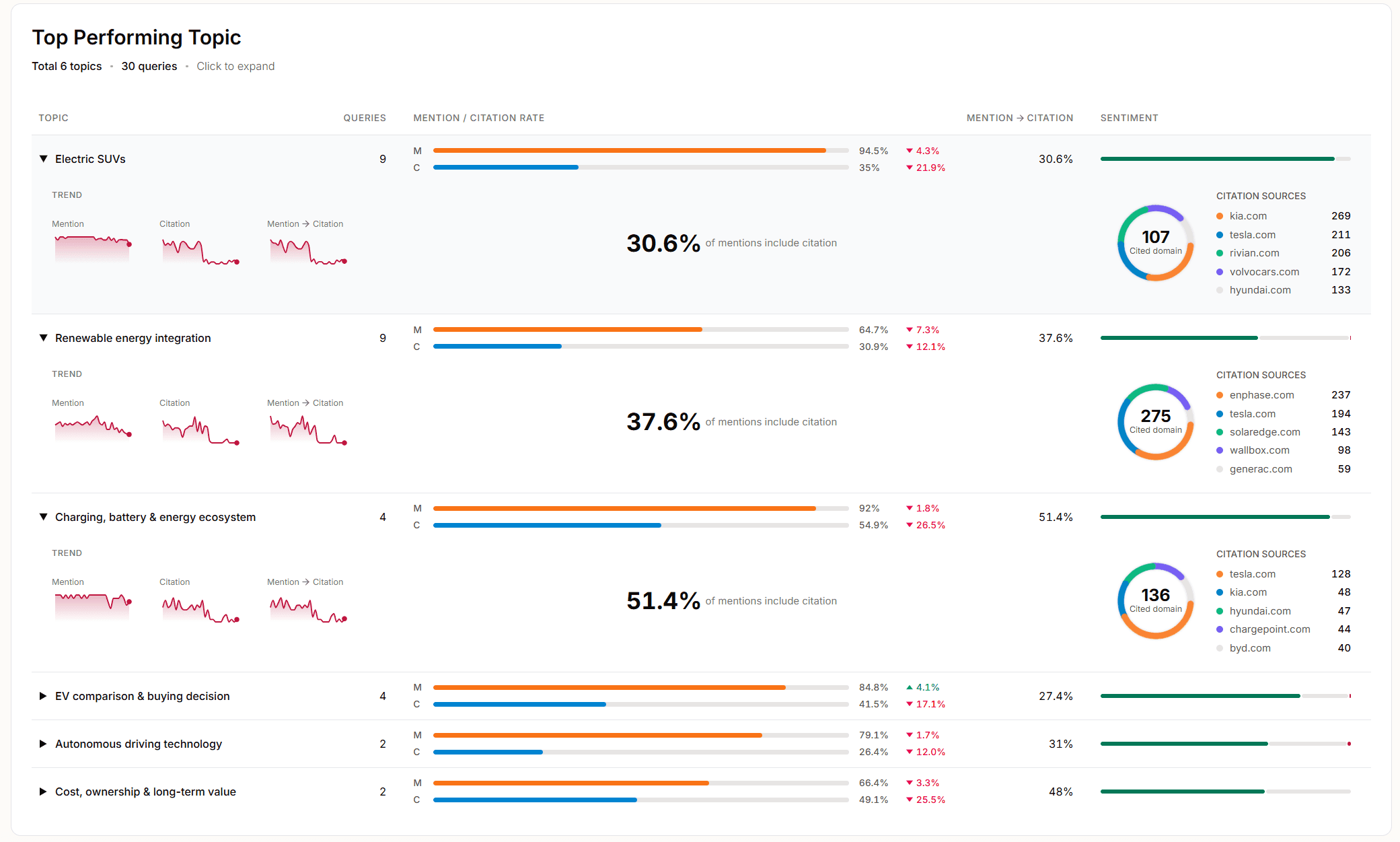
Before finalizing your content priorities, cross-reference the Topic Battlegrounds matrix with the Narrative Summary's Top Performing Topic table. Find the Mention Rate and Citation Rate for each topic you're considering. A topic where your Mention Rate is strong but your Citation Rate lags is one where you have AI recognition without the content authority to back it up. Content investment there should focus on citable, source-worthy pages, not just topical coverage.
Setting Priorities
Run this sequence when allocating content resources:
Pull the Topic Battlegrounds matrix for your full time window. Identify your Pattern 4 topics first, those with low total mentions and low competitor presence. These are your fastest path to establishing new citation territory.
Then identify your Pattern 2 topics, where you lead but a competitor is within reach. Rank them by how close the gap is. The tightest gaps need attention first.
For each priority topic, open AI Response Insights and filter to that topic's queries. Read the Fan-out tab to see how AI models decompose those queries. The sub-queries are your content brief: pages that answer those sub-queries directly are the ones most likely to earn citations.
Check the Citations tab filtered by topic to confirm which of your existing URLs are earning citations in that cluster. New content investment should fill gaps, not duplicate what's working.
Next in this series, Part 9: Extracting AEO Content Briefs from Semantic Sentiment Maps covers how to use sentiment data at the query level to identify the specific framing AI models use when responding about your brand, and how to use that framing to inform content strategy.
Share on social media