The "Best of" Trap: Why Self-Ranking Listicles Are Becoming an AI Visibility Liability
Self-ranking listicles are becoming a visibility risk because Google and AI systems increasingly favor independent evidence, firsthand experience, and information gain over self-promotional “best of” pages that rank the publisher’s own brand first.

Ly Phan
AI Visibility Researcher and Editor
Update on
Visibility Monitoring

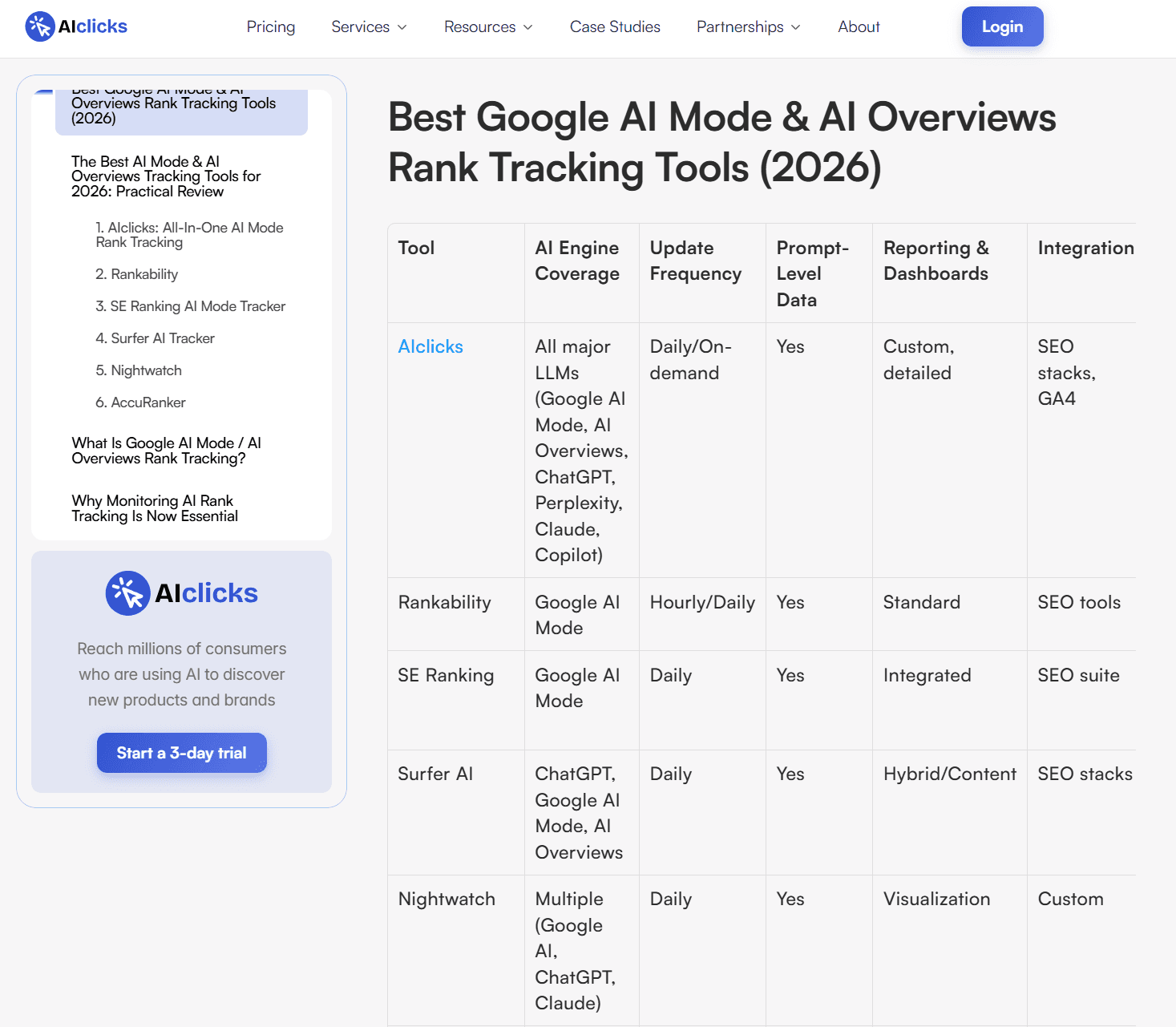
In the evolving landscape of Generative Engine Optimization (GEO), the self-ranking listicle has long been a favorite tactic. The formula is simple: Publish a post titled "Top 10 Best Digital Agencies in 2026" for example, rank your own brand at the #1 position, and wait for LLMs to ingest that data.
Why Google is Cracking Down on Self-Ranking Listicles
Because LLMs prioritize structured, list-based data, many take the bait, citing the brand as a leader simply because it claimed the title on a well-formatted page. However, recent forensic analysis of Google’s ranking behavior suggests this shortcut is becoming a significant liability.
Forensic Evidence: The Crackdown of Self-Ranking Listicles
Analysis of recent Google volatility reveals a systematic devaluation of content that lacks primary evidence. According to analysis by Lily Ray on the January 2026 unconfirmed updates, there is a distinct pattern of self-serving or self-promotional listicles losing significant ground. These are typically SaaS or agency blog posts where the publisher ranks their own product at the top of the list.
Forensic SEO researcher Carolyn Holzman notes that this isn't necessarily a new rule against the listicle format itself, but rather a refinement of the unhelpful content signals first established in the March 2024 Core Update.
Key findings from the forensic data:
The Rise of Perspectives: Google and LLMs alike are frequently replacing traditional professional listicles with forum results from Reddit and Quora. This indicates a preference for authentic, first-person experience over optimized brand summaries.
The Self-Serving Penalty: Sites that once saw massive gains by ranking themselves #1 are seeing those gains wiped out. As Ray observes, what worked as a GEO tactic yesterday is becoming a major risk for SEO today.
Pattern Recognition: Google’s automated systems are now better at identifying typical affiliate-style listicles that exist purely to rank products rather than provide genuine testing or independent verification.
Why the Tactic Fails the AI Test
For an SEO practitioner, a self-ranking listicle is a way to capture commercial intent. But for GEO, it is a low-confidence signal. LLMs do not just read your list; they look for information gain, which is a concept where search engines (and the AI models that follow their lead) measure how much new information a page provides compared to what is already known.
Self-ranking posts often fail this test because they usually regurgitate specifications without providing an original delta of information. If a page offers no unique data or hands-on testing, it is flagged as unhelpful. This creates a trust gap: the AI model sees the claim but finds no external nodes or evidence to corroborate it, leading to an omission signal.

The "Best of" Trap: Why Self-Ranking Listicles Are Becoming an AI Visibility Liability
The Pivot: From Promotion to Evidence
To maintain visibility in 2026, brands must move from ranking themselves to providing the proof that AI models require for high-confidence citations.
Prioritize Information Gain: Avoid regurgitating basic specs. If you list your agency or product, include proprietary data, internal case studies, or a specific methodology that cannot be found elsewhere.
Document the Experience: As the traditional listicle format comes under fire, brands must supplement lists with deep-dive analysis and original imagery. This proves the content wasn't generated by a thin template.
Bridge the Trust Gap: If your brand is missing from AI answers, it is often because your content lacks the experience signals Google is now prioritizing. Independent verification is the new currency of visibility.
Final Diagnostic
If your growth strategy relies on "Top 10" or "Best of" posts where you are always the hero, you are building on a fault line. As Google continues to devalue thin comparison content, the LLMs that use these results for training and retrieval will treat your self-promotional lists as low-confidence data.
Is your brand being cited or omitted in the latest LLM snapshots? Operyn provides the visibility analytics needed to track how AI models perceive your authority.
Share on social media